Rice Croquettes with Seafood and Pork
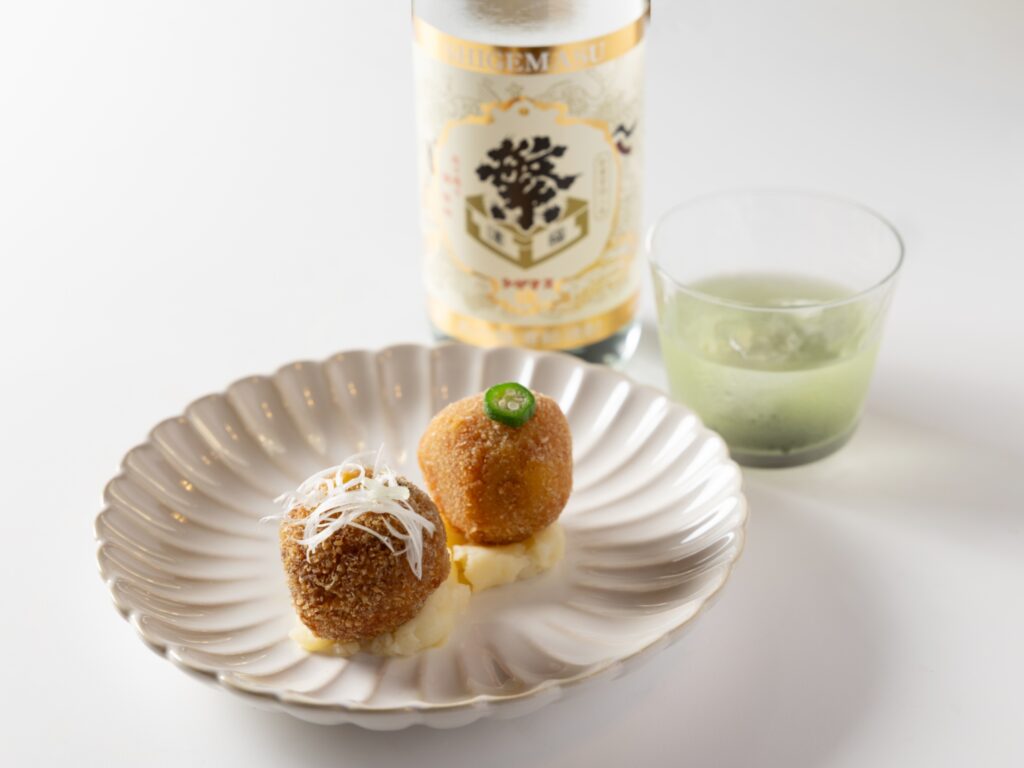
In Italy, they're called "arancini," which means "little oranges." Do they look like oranges to you?
This dish originated in Sicily and Naples, Italy, and was named for its golden-brown, deep-fried appearance, which resembles an orange. If you see “arancini” on the menu at an Italian restaurant, it might be easier to order if you remember that they’re rice croquettes. This time, we’re featuring seafood curry-flavored croquettes with shrimp and squid, as well as Chinese-style char siu rice croquettes.
(Recipe by: Yame Saheho)
*The photo shows Shigemasa Daiginjo Sake Kasu Shochu mixed with green tea. Please give it a try with your favorite tea from your favorite tea shop.
Ingredients: Easy-to-make quantities
=Seafood=
Rice: 2 bowls
8 peeled shrimp
Squid, 60 g
3 tablespoons of ketchup
1 tablespoon curry powder
1/4 onion
Butter, cut into 2-cm cubes
1 tablespoon of oil
=Pork=
Rice: 2 bowls
Chashu 80 g
2 tablespoons of cooking liquid
White scallions, to taste
《Flour, eggs, breadcrumbs, and enough oil for frying》
How to Make It
1. For the “Seafood” dish, heat oil and butter in a skillet. Once hot, add the finely chopped onion, shrimp, and squid, and stir-fry. When everything is cooked through, add ketchup and curry powder and mix well. Let it cool slightly.
=Pork=: Finely chop the chashu and mix it with the cooking liquid into the rice.
2. Shape both into balls weighing 40 g each. Coat them in flour, dip them in beaten egg, and coat them in breadcrumbs. If possible, shape them into perfectly round balls.
3. Fry in oil heated to 180°C for 4 minutes. Once the entire dish is golden brown, it's done.
4. When plating, top the =pork= portion with thinly sliced green onions.
Grocery List
☆Curry Powder: While there are as many spice blend recipes as there are stars in the sky, in Japan, the flavor preferred by Japanese people seems to be fairly standardized. In places like India, where curry originated, the blend varies depending on ethnicity, religion, and ingredients, and the concept of “curry powder” as we know it doesn’t seem to exist. The name “curry” actually comes from the Tamil word “kari,” which refers to a stew made with a variety of spices. If you were to count the number of different flavors created by each household, there would likely be as many as there are stars in the sky. The basic blend typically combines spicy ingredients like red pepper, black pepper, ginger, and mustard with aromatic spices such as cumin, fennel, cinnamon, cloves, nutmeg, and cardamom. Turmeric is typically added for color, and cilantro is used to thicken the sauce. In Japan, pre-mixed blends are readily available, making it easy to prepare, but if you’re aiming for an original recipe, blending your own spices can be a fun experience. Many of these spices aid digestion, and adding herbs can help stimulate the flow of energy and relieve indigestion. Since they also stimulate the appetite, it’s a good idea to make good use of curry powder when you’re feeling a bit sluggish.
☆Green Onions: In Kyushu, the term “green onion” typically brings to mind green-leafed varieties, but here we’ll be discussing the type with a predominantly white part—commonly known as “negi,” “shiro-negi,” or “naga-negi.” In medicinal cuisine, they’re called “sōhaku” (white scallions) and are considered an ingredient that promotes sweating, expels cold that has entered the body’s surface, warms the lungs and abdomen, and protects the body from the cold. They’re effective against cold-induced headaches, stomachaches, and stiff shoulders, so if you’re prone to these issues, it’s a good idea to incorporate scallions into your daily diet. They’re also recommended for people who experience clear nasal discharge. Since they’re so potent—so much so that they’re often used as a seasoning—you don’t need to eat large amounts, but there’s no doubt your body will thank you if you make a point of including them in your diet during the cold season. However, be careful: they’re contraindicated for people who sweat even when sitting still.