


Fig Cottage Cheese with Honey-Pepper Sauce
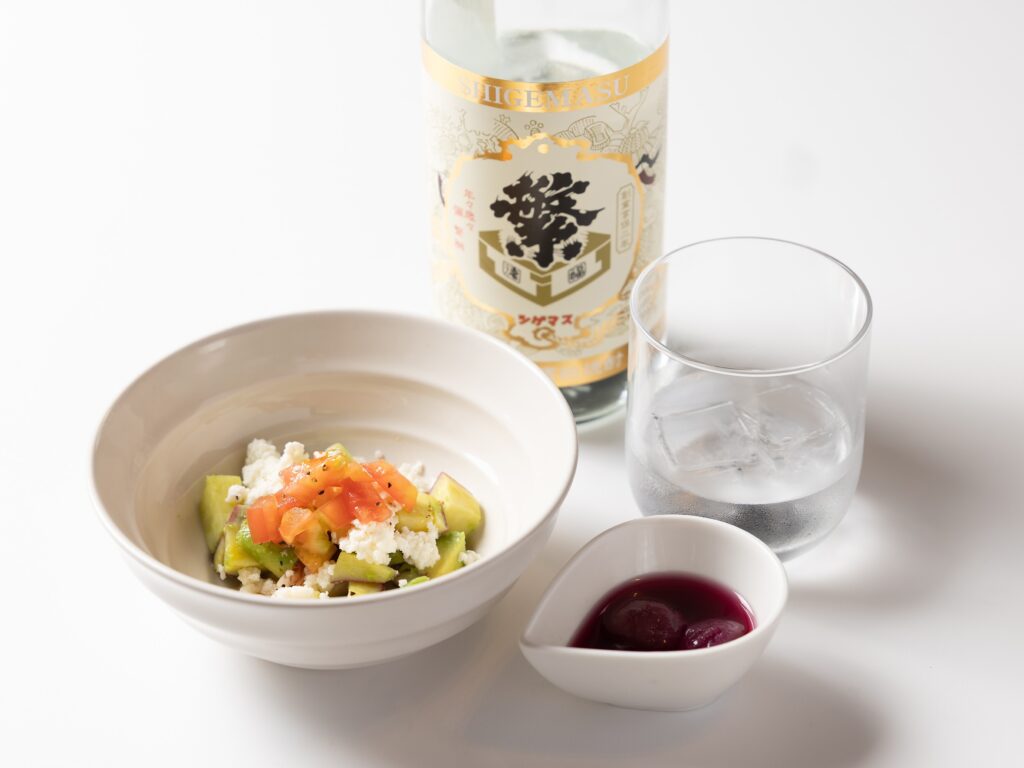
Figs have been a source of vitality in Japan since the Edo period. They hydrate the body and promote digestive health.
It’s said that the name “ichijiku” (fig) comes from the phrase “ichi-juku,” which means “ripening one at a time”—a reference to the fact that the fruit ripens one by one, with each taking about a month to ripen after it forms. I’d always wondered why the kanji for “fig” was written that way, but it seems to be a phonetic loanword. Figs are mentioned in the Bible and have long been prized as the fruit of eternal youth and longevity. This fall, I recommend this combination: avocados for hydration, sweet potatoes to support digestive health, tomatoes for both benefits, and homemade cottage cheese to boost hydration even further.
(Recipe by: Yame Saheho)
Ingredients: Serves 2
2 figs
1/2 avocado
1/4 sweet potato
1 tomato
"Cottage Cheese: 500 ml milk, 2 tablespoons lemon juice (or vinegar if unavailable), a pinch of salt"
1. Add lemon juice and salt to the milk, mix well, and let it sit in the refrigerator for about an hour.
2. Add the mixture from step 1 to a pot, heat over medium heat, and cook without stirring until the cheese and whey separate.
3. Once separated, strain through a colander lined with paper towels, and it's done. You can eat it while it's still warm.
"Honey Pepper Sauce: 2 tablespoons honey, 1/4 teaspoon salt, 1 teaspoon coarsely ground black pepper"
1. Put the honey in a bowl, then add salt and black pepper. Add the whey from the cottage cheese to achieve your desired consistency.
How to Make It
1. Peel the figs and cut them in half lengthwise. Cut the sweet potatoes into 1-cm cubes and parboil them. Peel and pit the avocado, cut it into 1-cm cubes, and combine it with the tomatoes, which have also been cut into 1-cm cubes. (This prevents the avocado from browning.)
2. Place the figs on a plate, top with the sweet potatoes, avocado, and tomatoes, add a dollop of cottage cheese, drizzle with honey-pepper sauce, and it’s ready to serve.
*The photo in the lower right shows a sauce made by simmering Kyoho grapes. We’d like to suggest a new way to enjoy it: mixed with Shigemasa Daiginjo Sake Kasu Shochu.
Grocery List
☆Figs: Figs are rich in digestive enzymes. Ficin, an enzyme that breaks down proteins, aids digestion. This is the white, milky substance that oozes out when a fig is cut; in the past, it was used to treat warts and insect bites. Figs also contain fat-digesting enzymes and starch-digesting enzymes, which work together to normalize gastrointestinal function. Furthermore, they contain enzymes that break down lipid peroxides, making them a recommended fruit for preventing lifestyle-related diseases. From a medicinal cuisine perspective, they not only strengthen the digestive system but also moisturize the lungs, soothe coughs, and reduce inflammation. Additionally, the leaves have long been used as an external remedy. Nowadays, dried versions are available, so you can enjoy them as a snack year-round. However, while they contain sugar and are rich in iron, eating too many can actually strain the stomach and inhibit calcium absorption, so it’s best to consume them in moderation.
☆Milk: Reliefs (carved images) found on ancient Egyptian ruins and sarcophagi clearly depict people milking cows. Humans have been consuming milk as a food source for 4,000 years. It was introduced to Japan during the Asuka period, and there are records indicating it was used as medicine for the Emperor and imperial family. Today, when you go to a store, you’ll find many different types of milk for sale; generally, unadjusted milk is classified as “milk,” while low-fat milk is classified as a dairy product. Pressure pasteurization is the standard method, typically involving pasteurization at 130°C for 2 seconds. This ensures the milk remains sterile until opened; however, once opened, bacteria can easily multiply due to its rich nutrient content, so it’s best to finish it promptly after opening. It contains not only high-quality protein but also a well-balanced array of vitamins, and it is effective for the often-cited purpose of calcium supplementation. However, to absorb calcium more effectively, it’s best to pair it with foods containing magnesium; we recommend cooking it with ingredients like spinach or soybeans. In the context of medicinal cuisine, milk is believed to strengthen the digestive system, moisturize the body, and improve bowel movements. However, since many Japanese people do not possess the enzyme needed to break down lactose, it’s inevitable that a certain number of people experience stomach upset when drinking milk. During infancy, this lactase enzyme is active, allowing babies to obtain nutrients from breast milk or formula; however, as children grow older, this enzyme becomes inactive, leading some people to develop an intolerance to lactose. Although it’s not mentioned as much these days, the old saying “Chew your milk before drinking it” wasn’t meant to suggest that chewing improves digestion. Rather, it was the wisdom of our ancestors, advising against pouring cold liquid directly into the stomach—instead, chew it to warm it up before swallowing. Since milk isn’t limited to drinking but can also be used in dairy products like cheese and yogurt, as well as in cooking, it’s a versatile ingredient that’s best enjoyed through creative preparation.
