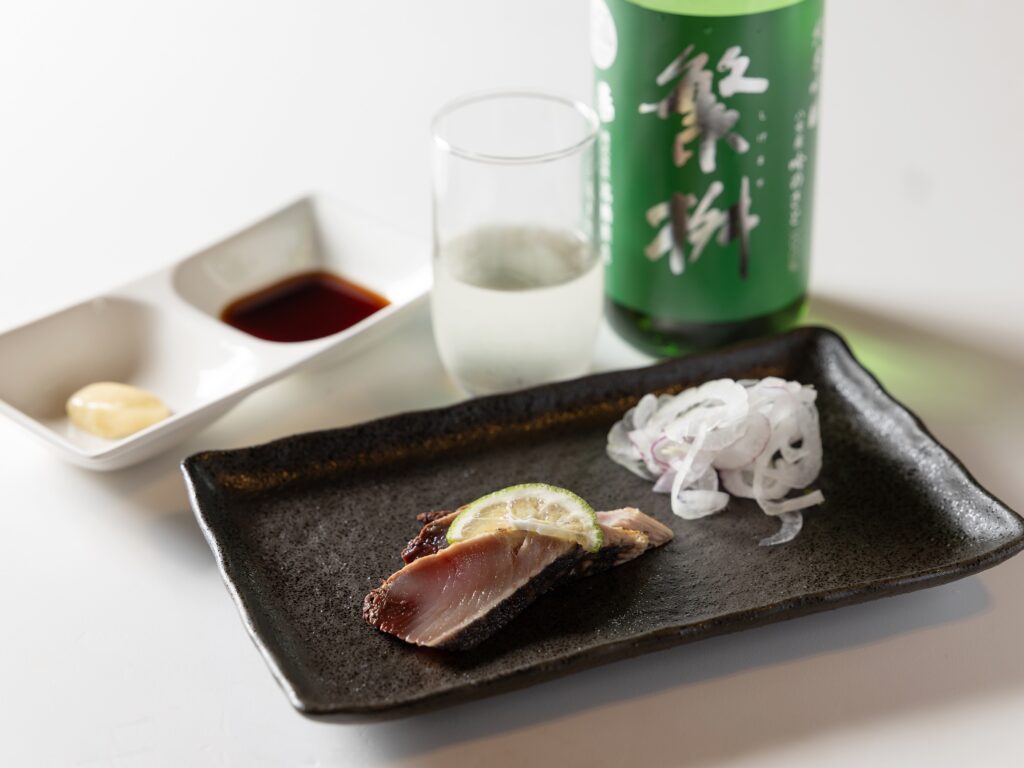
Seared Bonito with Kabosu Vinegar and Garlic Mayonnaise
It's the fastest swimmer among fish. I'll borrow a little of that power.
This is the bonito fish, an indispensable ingredient in Japanese cuisine. It is a prime example of a fish that can be enjoyed both fresh and dried. Bonito flakes are carefully prepared through a time-consuming process to ensure they do not spoil and to maximize their shelf life. The firm texture of bonito flakes is the embodiment of Japanese culinary wisdom. From the perspective of modern nutrition as well as the principles of medicinal cuisine, bonito possesses the power to revitalize the body. Even during seasonal transitions, its benefits remain undiminished, permeating the body deeply.
(Recipe by: Yame Saheho)
Ingredients: Easy-to-make quantities
Seared Bonito, 1 book
1/2 onion
Purple cabbage, 15 g
Daikon Radish Sprouts, 1/2 pack
How to Make It
1. For the seared bonito, you can either buy it from the sashimi section and slice it yourself, or buy it pre-sliced. Shred the onion and purple cabbage, combine them with the daikon sprouts (with the roots removed), and soak them in water.
2. Arrange the sliced seared bonito on a plate, place the drained vegetables alongside it, and it’s ready to serve. Serve the ponzu and mayonnaise on separate plates.
"Kabosu Vinegar: 100 mL soy sauce, 100 mL mirin, 1 piece of kombu (5 × 5 cm square), a handful of katsuobushi, 1 kabosu"
—Directions—Place soy sauce, mirin, kelp, and bonito flakes in a pot and let sit overnight. Place the pot on the stove; once it comes to a boil, cook over medium heat for 1 minute. Once cooled, squeeze in the kabosu juice.
"Garlic Mayonnaise: 1 clove of garlic, 50 mL of milk, 100 g of mayonnaise"
—Directions—Pour the milk and garlic into a saucepan and heat over low heat for about 10 minutes. Once it has cooled slightly, transfer it to a mortar and mash it. Mix in the mayonnaise, and it’s ready to serve.
Grocery List
☆Bonito: Bonito caught in early summer is called “hatsu-katsuo,” while that caught in the fall is called “modori-katsuo.” Edo locals have long prized hatsu-katsuo as a seasonal delicacy, and it has been considered a mark of sophistication to be the first to eat it. Nowadays, there is a tendency to prefer the fattier “returning bonito.” It is rich in protein and contains taurine, which is good for the liver, as well as vitamin D, which helps strengthen bones. As its red flesh suggests, it is also rich in iron and copper, making it effective for preventing anemia. For those concerned about these issues, using dashi made from katsuobushi (dried bonito flakes) can significantly improve your condition. It is a highly nutritious fish, rich in B vitamins—which aid in recovery from fatigue—and, of course, contains DHA and EPA, which help purify the blood. From a medicinal cuisine perspective, it replenishes “qi” and “blood.” It’s effective for times when you lack the energy to push through one last effort, as well as for relieving shortness of breath, dizziness, and blurred vision. Since it also improves fluid metabolism, it’s recommended for people who suffer from swelling. It also nourishes the kidneys, making it beneficial for tinnitus, lower back fatigue, and children’s growth; if you make a conscious effort to include it in your diet, vitality will naturally follow. The Japanese word for “bonito” (katsuo) is phonetically linked to the word for “victory” (katsu), which is why names like Katsuo and Katsuo-san became more—or less—common for a time. While the bonito in some households might be a bit of a rascal, the bonito here is a real model student.